Leadyne

October 2020

The Research that started it all: Servant Leadership in Indian NGOs, A Doctoral Thesis by Dr. Madana Kumar

The Research that started it all: Servant Leadership in Indian NGOs, A Doctoral Thesis by Dr. Madana Kumar  Kindly provide you name and email address to view the following  Doctoral Thesis by Dr. Madana Kumar Download PDF file

The Research that started it all: Servant Leadership in Indian NGOs, A Doctoral Thesis by Dr. Madana Kumar Read More »

The Implementation Role of Leadership : Empowerment through Empathy

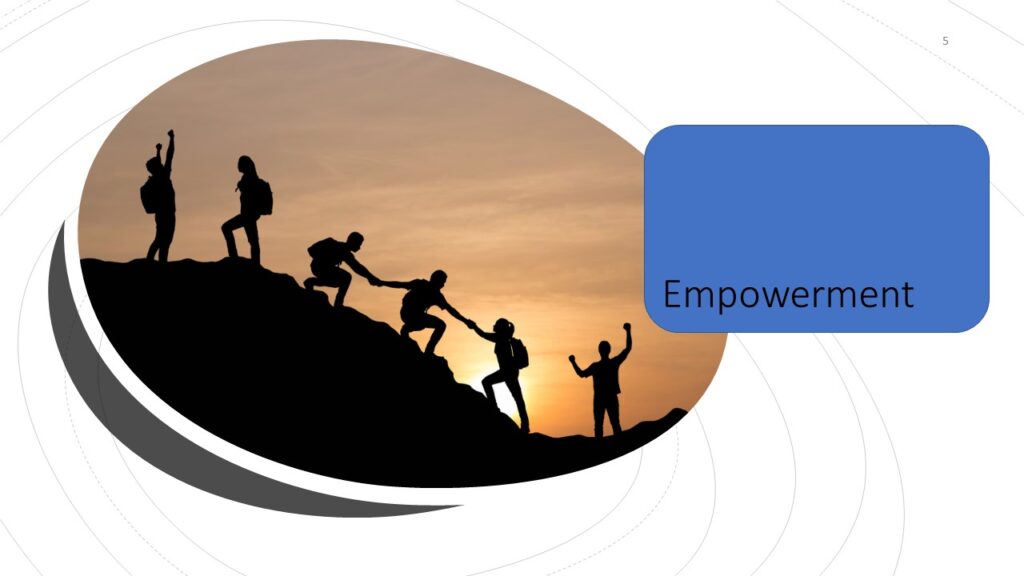
In my previous blog I discussed the need for Servant Leaders to be able to dream big and keep boundaries while chasing such dreams. At Leadyne, we call it the behaviour of Demonstrating Conceptual Skills. This is the beginning of great organisations. So, what is next? Is setting a higher purpose vision and goals enough by itself? The obvious answer is “No”. Visioning is one of the two key leadership roles. The second one is Implementation. During Implementation of the vision, mission, goals and values, Servant Leaders step aside and invert the pyramid. They create a culture where the employees feel they are fully responsible for the implementation of the vision, mission , values and goals. However the employees also know that the leaders have not gone anywhere. They know they can call upon the leaders as a resource when they need. The employees become responsible and the leaders become responsive to the employees’ needs. They serve the employees in fulfilling the organisation’s vision, mission, values and Goals. This concept is called the “Inverted Pyramid” and is an integral part of Servant Leadership Culture. To make the Inverted Pyramid work, Servant Leaders rely on another of the DEEP BHC behaviours viz; Empowerment. It is a very commonly used word. But let us dig a little deep into it. Is Empowerment something that you “give” to your followers? Have you heard some leaders claim “I have empowered my team fully.”  When Empowerment is something that the leader “gives” to their followers, the leader is implying that the power remains with me and I give you the part of that power. This is like claiming that you are most humble person in the whole wide world. Empowerment is not something given, but Empowerment is a climate that is felt by the followers. When they feel that they are Empowered to make decisions, even make mistakes, that is true empowerment. Chris Croft talks about the Freedom Ladder. Servant Leaders need to make conscious efforts to bring their people up the ladder, not by mere words but by appropriate behaviour. Let us take this conversation for example. Quote John: Hi Vinod. I found a problem with the code that we were supposed to release for the client yesterday and I have solved it by making some adjustments. I have released it to the clients and met the timelines committed. Just wanted to let you know and see what you think Vinod: Thanks John. You did well. May I suggest that in future, you pass such things through me before you release it to the clients? Unquote What do you think just happened here? John was at level 4 of the Freedom ladder and wanted to operate from there. Vinod’s reaction was a very clear message that Vinod wants John to be at level 3 of the Freedom ladder. What do you think John will do next time when faced with a situation like this? John is going to suggest and wait for Vinod’s approval before he does anything. In other words, knowingly or unknowingly Vinod has “pushed” John to Level 3 of the Freedom Ladder. This is what happens when the leader is not sensitive to the feelings of the team members while responding, even when the leader considers himself/ herself as am “empowering” leader. Therefore, at Leadyne, we map the behaviour of Empowerment to the attribute of Empathy. Unless as a leader is able to put himself/herself in the shoes of the employee and understand how they feel, empowerment cannot happen. It is important for leaders to understand what the team members think and feel. That is why I said at the beginning that Empowerment is a climate that the team member feels. True empowerment needs that you demonstrate behaviours that will help and encourage your team members to operate from Level 4 or level 5 of the Freedom ladder. Sure, there are risks in doing this. But in the long run, it will become a much stronger team and you as a leader will have a lot of time in your hands for doing higher purpose activities. Come join the Servant Leadership Movement and learn how to make your teams feel empowered. _____________________________________________________________________________________ Dr. Madana Kumar is the Servant Leadership Evangelist and Chief Consultant at Leadyne. You can contact him here.   __________________________________________________________________________________ Contact Leadyne if you would like to know the level of Empowerment in your team and wish to improve that.

The Implementation Role of Leadership : Empowerment through Empathy Read More »

Feedback from S.L.A.M Virtual Workshop – Sep. 7 & 8, 2020:

Feedback from S.L.A.M Virtual Workshop – Sep.7 & 8, 2020: “Initally I thought how would I invest these two days but looking at captivation and involvement It was a great investment of time. learnt a lot. Need to reflect more on Servant Leardership what I learnt these two days. Hats Off to Dr Madana”. Mr. Rajeeb Tripathy, AGM HR, MothersonSumi Infotech and Designs Limited- Noida “Great Work, great content, most importantly great reflection and clear action plan. Something to think about if the class can be divided into 4days”. Mr. Parthiban Vijayaraghavan, CEO, Leaderonomics India Pvt Ltd. – Pune “It was really challenging about One Minute exercises and Heart and Head sections. Mostly about Head as that is where behavioural pattern needs to start following and in practice.” Mr. Ketan Christian, Regional Operations Coordinator, India Campus Crusade for Christ. “The 2 days SLAM workshop is really a change agent for me. Lot of learnings on how to be a servant leader in corporates as well as in family. The session was well organised and the co-participants were very interactive” Mr. Bastain Babu, CEO, Skillwise Consulting. – Chennai. Thanks for these two days of learning. It helped me to endorse what I do most of the times & better clarity in certain situations. Every little learning adds up to make it significant in the final analysis. Thank you! M. Julian Panga The report gave me some good insight about the need to give my team more time by making myself available as a leadership coach I found this program insightful and a good reminder for what is needed to be a better Servant Leader. Mr. Shohrat Shankar, Coach and Founder, Search 4 Excellence- Pune.

Feedback from S.L.A.M Virtual Workshop – Sep. 7 & 8, 2020: Read More »

Socialized Power

Service is Power 1 Feb 2020   In this episode, listeners will discover: The definition of Socialized Power How to practically identify personalized power behavior The 7 Competencies for exhibiting Servant Leadership Show Highlights 0:00 Show Start 4:50 Dr.Kumar Intro 6:25 The difference between Personalized and Social Power 9:48 The dangers of power motivation 13:15 How Servant Leadership overcomes personalized power 17:00… Connect with Madanakumar @ https://leadyne.com/dr_madanakumar Listen in Google Podcast (Click the below button):

Socialized Power Read More »

Servant Leadership Journey at a Digital Services Corporate

Stars of Learning Podcast 2 Oct 2019 Topic: Servant Leadership Journey @ UST Global Dr. Madana Kumar – Servant Leadership Evangelist, a passionate Thought Leader and Strategist on Leadership, and Organisational Learning who speaks at various forums like the NHRD, HR summit, CLO summit, ATD, etc. Currently balancing two roles. one in Corporate as the Vice President and Global Head of L&D at UST Global. Second in Theological Education as Director- Center for Leadership at South Asia Institute of Advanced Christian Studies. He holds a Ph.D. in Business Administration. He has dual Bachelor Degrees, a B.Sc (Physics) and a BE from the Indian Institute of Science. He holds an Advanced Diploma in Business Administration and Certificates on Leadership awarded by the Cornell University, USA. For his Doctoral work, Madana studied the application of Servant Leadership in Indian NGOs. Has won multiple awards nationally and internationally   Few questions I ask Dr. Madana Kumar on the relevance of Servant Leadership at larger companies and is it really possible to practice servant leadership and his tips and techniques  who is driving this mission & practicing it internally at his company UST Global is as follows: Time Stamps: 5:46 to 37:28 You also call yourself `Servant Leader Evangelist’ what does that mean to you? Why this passion and how did this arise….on `Servant Leadership How did you believe that the Servant Leadership style is appropriate for UST’s digital transformation journey? How did you enable for leaders in UST to embrace it and scale-up, & to stay relevant and be part of this transformation journey? Is there an issue in acceptance of Servant Leadership and how do you engage the direction? How are you making the changes for people to adapt to servant leadership? How did you enable the leadership buy-in to adopt servant leadership? How this is being implemented in UST and how leaders across the system can adopt it in their daily work lives & advantages it can bring to them as a leader? Does Servant Leadership enhance the Employee Engagement in your teams? What is the Commitment from Management to the growth of people in business on Servant Leadership How about `Global Servant Leadership’ in India as well as global at UST? Where do you see this getting applied and breaking the myth and understanding the power of Servant Leadership? How do servant leaders deal with the attention & power of servant leadership? How many leaders will consciously and selflessly let the employees grow more than himself/ herself? Are there any examples of servant leaders in our world and any companies who have adapted Servant Leadership? & where to find more information about Servant Leadership? “Powerful question” to my guest to unveil for my listeners.  to engage, enlighten and empower (& that’s the mission of my podcast too) Time stamp at 37:29 to 46:23 According to you, what is the “STAR” moment? What “inspires you” to do everything that you do If you owned the company, what’s one thing you would do differently in learning? What are the three most important things you would like to accomplish right now? What are your strengths? What’s the best book you’ve read this year? or anytime you recommend for my listeners. What are the characteristics of the best boss role models or mentors/coach you ever had? What made that person great? Are there any tools that you use on a daily basis to be a better you? Is there any habit, you are practicing which has made you successful in whatever you do? Your advice for those who want to accelerate their career as a Servant Leader? Authors mentioned in this episode: Robert Greenleaf Ken Blanchard John Maxwell Simon Sinek Resources mentioned in this episode: Servant Leadership in Action by Ken Blanchard A Life of Servant Leadership by Don Frick Companies who follow Servant Leadership Chick-Fil-A South West Airlines Marriott International Wal-Mart Starbucks Connect with Madanakumar @ https://leadyne.com/dr_madanakumar Listen in Google Podcast (Click the below button):

Servant Leadership Journey at a Digital Services Corporate Read More »

Global Servant Leadership

30 Sept 2018 In Episode 10, my mentor in all things Servant Leadership, from Banglore, India Dr. Madana Kumar makes his way on the podcast! Dr. Kumar gives key insight to the core of Servant Leadership, it’s history and some of the numbers and research that proves that Servant Leadership works! Get ready to be convinced that self-serving… The post Episode 10 – Global Leadership w/Dr. Madana Kumar appeared first on Service Is Power. Connect with Madanakumar @ https://leadyne.com/dr_madanakumar Listen in Google Podcast (Click the below button):

Global Servant Leadership Read More »

Servant Leadership : A way of life

7 Oct 2020 Focusing on others, their needs, their views, their successes, doesn’t come naturally to most of us. Especially in a corporate dog-eat-dog world that’s me-centered. But for some, it’s not just a learning philosophy but a way of life. Dr. Madana Kumar has been walking the talk on Servant Leadership as he balances two roles: one as the Vice President and Global Head of Leadership Development at UST Global and, second, as a Servant Leadership Evangelist helping organizations implement and benefit from this new leadership paradigm. With a PhD in Servant Leadership, Dr. Madana leverages his doctoral know-how and close to 4 decades of experience across leading businesses to strategically transform the L&D function, shape the learning strategy of growing organizations, create and nurture a learning culture, and accelerate digital transformation with ‘people-first’ approach at its heart. Connect with Madanakumar @ https://leadyne.com/dr_madanakumar Listen in Google Podcast (Click the below button):

Servant Leadership : A way of life Read More »

Demonstrating Conceptual Skills: Taking Servant Leadership from Oxymoron to Reality

One of the biggest stumbling blocks for acceptance of Servant Leadership in corporate circles is the belief that Servant Leadership is an oxymoron. Critics of Servant Leadership often ask the question “How can one be a servant and a leader at the same time?”. The original definition given by Robert Greenleaf that “A Servant Leader is a servant first…” did not make it any easier for the concept to get acceptance in wider circles. This apparent contradiction in the term is what made Servant Leadership acquire an esoteric nature for quite a long time after it was propounded by Robert Greenleaf in 1970. Several Leadership gurus have tried to break that oxymoron nature of Servant Leadership recently. Notable among them are the works of Ken Blanchard.  Ken dives into the two leadership roles of Vision and Implementation to explain how Servant Leadership fulfills both the roles with a difference. In this blog, let us look at the first leadership role, viz; visioning. In a previous blog I had described the DEEP BHC Behaviours. You will notice that the first behaviour that we have listed there is Demonstrating Conceptual Skills. This is the behaviour that helps a Servant Leader to set a vision for self and the team and/or organisation. This essentially requires two skills viz; Conceptualisation and  Foresight. Conceptualisation is the skill to dream Big Dreams. Servant-leaders seek to nurture their abilities to “dream great dreams.” But what does this actually mean? The ability to look at a problem (or an organization) from a conceptualizing perspective means that one must think beyond day-to-day realities. While we must focus on day to day realities, we should be able to look beyond them and see beyond what is there today. As children we do this intrinsically. As we grow up, we tend to lose this ability to dream big. History shows that  leaders who dreamt big made a difference. Martin Luther King had a dream and that changed the US society. Mahatma Gandhi had a dream that made India achieve independence through non-violence. Nelson Mandela had a dream that changed Africa. Walt Disney had a dream that made Disney Land a preferred place for everyone. Herb Kelleher dreamt of an airline that will give its customers more for less . Let me quote Herb “One of the things that people, I think, didn’t understand is that we started out saying we’re going to give you more for less, not less for less. We’re going to give you new airplanes, not old airplanes. We’re going to give you the best on-time performance. We’re going to give you the people who are most hospitable.”. This was a crazy dream way back in 1971, in one of the most competitive and difficult industries to be in. Chasing dreams at any cost, without boundaries can be dangerous. Servant-leaders must seek a delicate balance between conceptualization and day-to-day focus. That is where the second skill of Foresight comes on. Foresight is the ability to learn from our past experiences, our current realities and the possible consequences of our actions in future. This is what defines the boundaries of what an organisation will do to go after the big dream that they have/had. Several organisations with big dreams flounder and fall through the crack, because they chase their dreams, not paying attention to boundaries. The cases of Enron, or Exxon, or Satyam or Kingfisher Airlines are classic examples of chasing big dreams without foresight. Successful organisations use their foresight to channel the process of chasing the dreams within certain boundaries. Walt Disney did it with their set of values. So did Southwest Airlines. The story of Tata as a group is an interesting study of this aspect too. Let me quote Ratan Tata “Business, as I have seen it, places one great demand on you: it needs you to self-impose a framework of ethics, values, fairness and objectivity on yourself at all times.” Integrity is the top value at Tata Group and that makes them one of the most respected business houses of all times. So this combination of conceptualization and foresight is what results in the behaviour of Servant Leaders Demonstrating Conceptual Skills. This  bursts the oxymoron nature of Servant Leadership. Servant Leaders dream big and have the foresight to avoid the pitfalls of chasing that dream without boundaries. Servant Leaders take on the responsibility of Setting the vision, mission, values and goals for the organisation, and the employees respond to such a vision.   Come Dream Big and join the Servant Leadership Movement. Develop the behaviour of Demonstrating Conceptual Skills We will discuss how Servant Leaders make a difference during the implementation of a vision in the next blog. Watch this space. __________________________________________________________________________________ Dr. Madana Kumar is the Servant Leadership Evangelist and Chief Consultant at Leadyne. You can contact him here. _________________________________________________________________________________ If you would like to know how to develop this behaviour of Demonstrating Conceptual Skills and be a Servant Leader, come and join our SLAM workshops or contact us here.

Demonstrating Conceptual Skills: Taking Servant Leadership from Oxymoron to Reality Read More »

Scroll to Top